Subcision vs Creams, Radiofrequency and Shockwave: Why Only One of Them Treats the Cause of Cellulite

Updated: 5 days ago
Short answer: Cellulite dimples are caused by fibrous bands under the skin. Creams, massage, radiofrequency (RF) and shockwave act on the skin surface, circulation or fat volume, so any improvement is temporary and needs repeating. Subcision cuts the bands, which is why a single session gives long-lasting results on treated dimples. Non-invasive options can still be useful for skin quality and texture, just not for dimples.
The mechanism decides the result
Under the skin, connective-tissue septa run vertically from the skin to the deeper layer. Where a septum is tight, it anchors the skin; the surrounding fat pushes up; a dimple appears. This is anatomy, not a "toxin" problem, and it does not respond to circulation or hydration.
Cellulite creams (caffeine, retinol, "firming")
What they do: temporarily tighten or hydrate the outermost skin, or slightly dehydrate fat cells (caffeine) for a few hours. What they cannot do: reach or release a septum several millimetres below the surface. Expected result: a subtle, short-lived smoothing; no change to dimples.
Massage and lymphatic drainage (including "cellulite" massage devices)
What they do: move fluid, reduce puffiness and improve the look of the skin for a day or two. What they cannot do: change the fibrous bands. Expected result: cosmetic, temporary, and it requires ongoing sessions.
Radiofrequency (RF) and RF microneedling
What they do: heat the dermis to stimulate collagen and mildly tighten skin over a course of sessions; some systems also target superficial fat. What they cannot do: cut a septum. Expected result: better skin firmness and texture, which can make mild cellulite look softer; dimples with a defined band remain. RF is a reasonable add-on for skin laxity after subcision.
Acoustic wave and shockwave therapy
What they do: mechanical pulses that improve circulation and may soften the superficial tissue over 6 to 12 sessions. What they cannot do: release bands permanently. Expected result: modest, temporary improvement in texture; results fade without maintenance.
Medical subcision
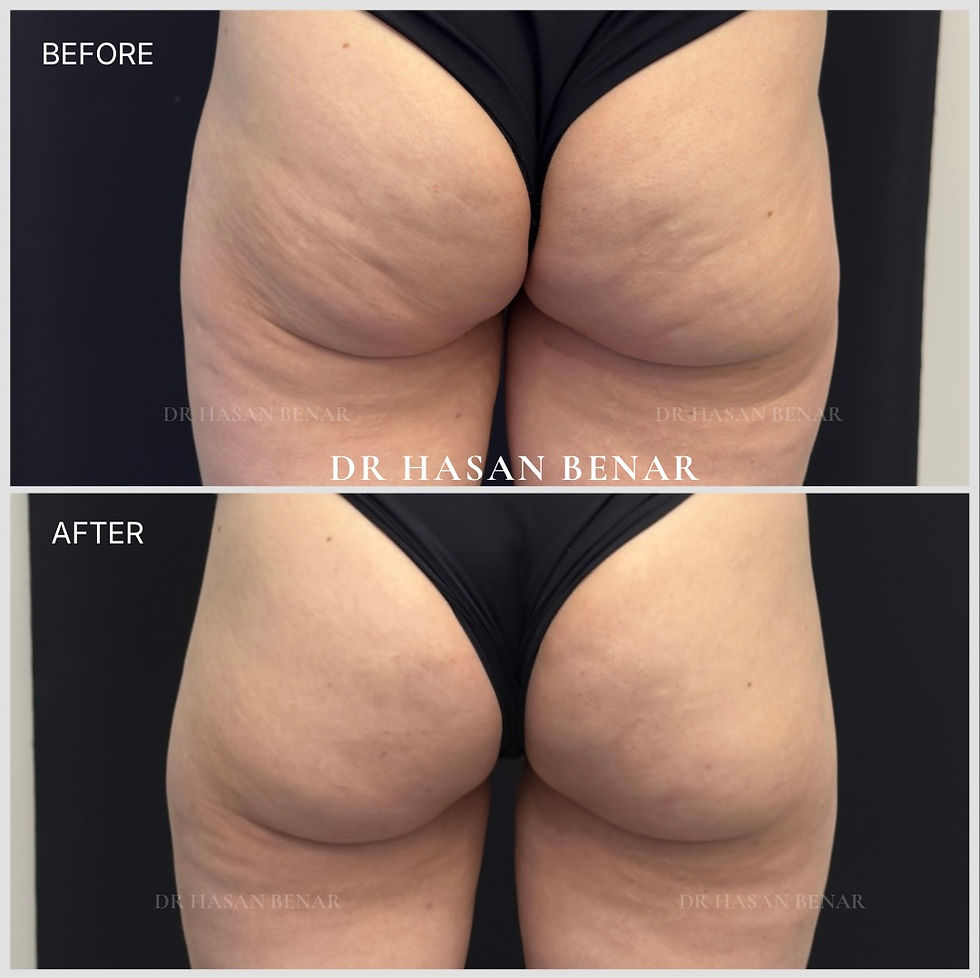
What it does: under local anaesthetic the doctor releases the specific fibrous bands under each dimple. Released bands do not reattach. Expected result: long-lasting, often permanent improvement of the treated dimples after a single session; published follow-up for band-release techniques runs to 3 to 5 years.
Side by side
Treats the cause (fibrous bands): creams no; massage no; RF no; shockwave no; subcision yes.
Long-lasting result on dimples: creams no; massage no; RF no; shockwave no; subcision yes.
Sessions: creams daily; massage and shockwave 6 to 12; RF 3 to 6 plus maintenance; subcision usually 1.
Best use: creams for hydration; massage for puffiness; RF for skin tightening; shockwave for texture; subcision for dimples.
Performed by: creams and massage, anyone; RF and shockwave, aesthetic practitioners; subcision, a medical doctor.
How to choose
If your concern is distinct dimples on the buttocks or thighs, only band release will change them. If your concern is loose or crepey skin, RF-type treatments are the right first step and subcision will not help. Many patients have both, and the honest plan is subcision for the dimples with a skin-quality treatment afterwards.
Frequently asked questions
Do cellulite creams work at all? They can hydrate and briefly tighten the surface; they do not remove dimples.
Is shockwave a waste of money? Not for texture and circulation, but it will not release bands, so expect maintenance sessions.
Can RF be combined with subcision? Yes; RF after subcision can improve skin firmness around the released dimples.
Why is subcision more expensive per session? Because it is a medical procedure with a single-session, long-lasting result; over two or three years it is often cheaper than repeated courses.
References
Hexsel DM, Mazzuco R. Subcision: a treatment for cellulite. International Journal of Dermatology. 2000;39(7):539-544.
Kaminer MS, et al. Tissue stabilized-guided subcision using the Cellfina device for the treatment of cellulite with 3-year follow-up. Dermatologic Surgery. 2017;43(10):1240-1248.
Sadick N. Treatment for cellulite. International Journal of Women's Dermatology. 2019;5(1):68-72.
Dr Hasan Benar is a dermatologist, practising at Dr Elif Clinic, 54 Harley Street, London.


Comments